Building Bridges 2026: The Bridge We May Still Be Missing
Building Bridges 2026: The Bridge We May Still Be Missing
From recognising Nature’s value to recognising contributions to our shared ecological inheritance.
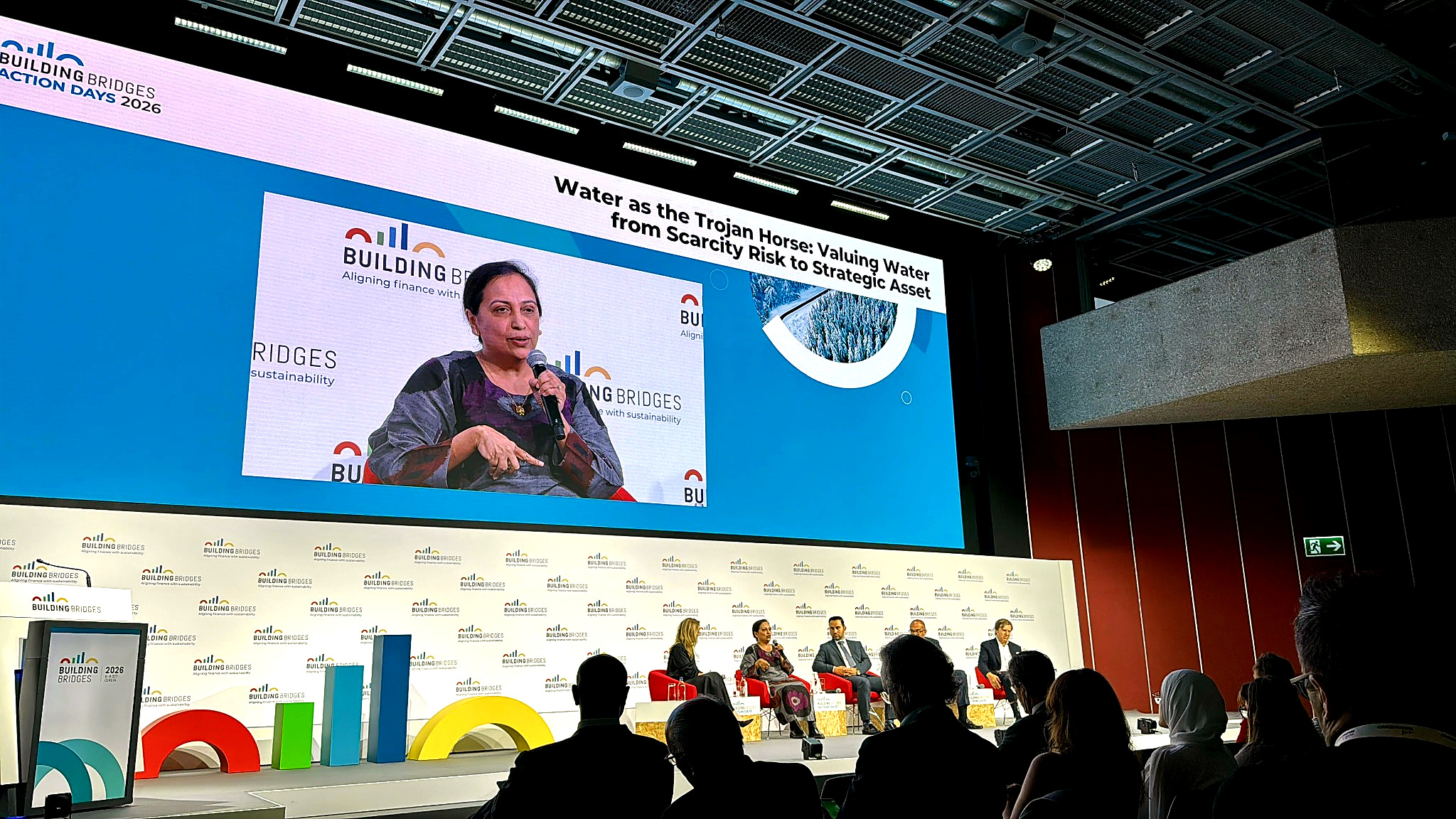
Three days in Geneva, remarkable encounters, countless conversations, and one question that kept returning: are we building all the bridges we need?
From 6 to 8 October, Building Bridges 2026 brought together representatives of finance, business, academia, civil society and international organisations around a shared ambition: aligning finance with sustainability.
We are developing increasingly sophisticated ways to measure environmental impacts, value ecosystem services, account for Nature-related risks and direct investment towards more sustainable outcomes.
These developments matter. But they also brought me back to a question I have been exploring for more than a decade:
How do we translate individual and collective contributions to shared ecological value into usable economic agency?
And how do we do so without needing to claim some form of ownership over Nature itself or the right to trade in its services?
From Recognising Value to Transmitting It
One recurring theme at Building Bridges was the need to translate sustainability information into economic and financial decisions.
The session From Sustainability Data to Investment Decisions: The Power of Impact Valuation captured an essential part of this challenge. Better information can influence how capital is allocated and economic activity is organised. My conversation with Martina Macpherson reinforced the importance of this connection.
But measurement and valuation, however sophisticated, do not automatically establish a means through which contributions to shared ecological value become economically meaningful for those making them.
Consider a forest. Its carbon storage, biodiversity, water regulation and contribution to human wellbeing can be measured, modelled and potentially assigned monetary values. Those values may influence investment, accounting or public policy.
Yet another question remains:
What economic capacity becomes available to people whose actions help maintain or restore that shared value?
Must someone establish ownership, acquire a tradable right or identify a purchaser before the contribution can have an economic consequence? Or might another institutional channel allow such contributions to receive recognition usable within everyday economic activity?
Making Nature’s value visible and making contributions to that value economically consequential are related, but distinct, tasks.
Nature’s Value Is Not Confined to What We Notice
We celebrate pandas, tigers and blue whales. Their extraordinary presence captures imaginations and mobilises attention for conservation.
Yet countless less visible species and ecological processes sustain the world around us without comparable attention, let alone recognition of their indispensable contributions within our economic architecture.
Soil organisms maintain fertility. Pollinators support food production. Wetlands regulate water flows. Interdependent ecological systems underpin the wellbeing and prosperity on which economic activity depends.
Nature does not need to be charismatic to be indispensable. Nor does its contribution become less important because we cannot easily observe, price or appropriate it.
Markets are remarkably effective at organising exchanges involving goods, services and rights that can be owned, contracted or traded. They are less naturally equipped to recognise value that is shared, distributed and not readily attributable to an individual owner.
Efforts to improve the valuation of Nature address part of that limitation. But recognising Nature’s value is only the beginning.
Creating a channel through which people contributing to its preservation and restoration gain meaningful economic agency is another challenge entirely.
A Missing Transmission Channel for the Commons?
Some of the most valuable exchanges took place away from the formal programme.
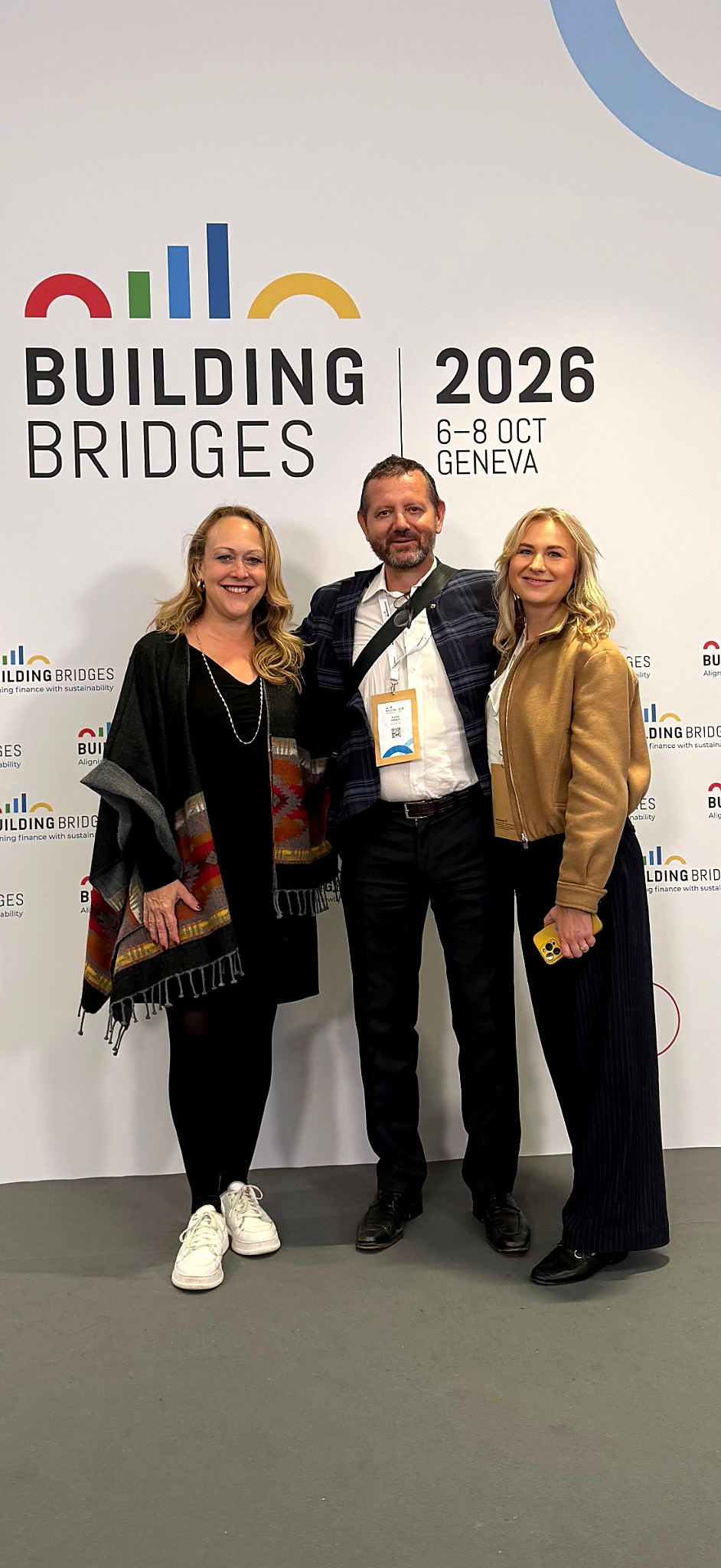
When I raised the idea of a missing transmission channel for contributions to shared ecological value with Sabine Döbeli of Swiss Sustainable Finance, the underlying question seemed to resonate immediately. Our subsequent exchange also brought a critical issue into focus: who should have the authority to determine what qualifies for recognition?
If ecological value is part of our shared inheritance, legitimacy cannot depend indefinitely on the discretion of one entrepreneur, company or institution.
- What should count as a contribution, and on what evidence?
- Who qualifies and validates it?
- How should recognition be issued and accepted?
- Who should participate as the rules and institutions evolve?
These are not just technical questions. They concern institutional legitimacy, accountability and public participation.
Exchanges with Pavan Sukhdev, Jon Duncan, Ivo Mulder, John Tidmarsh, Mark Halle, Benjamin Simmons, Simon Zadek, Eva Zabey and others added different perspectives drawn from sustainability, finance, policy and institutional change. The value of these conversations was not unanimity, but the opportunity to examine the challenge from several directions.
Extending the Value Architecture of Market Economies
These questions are the basis of my forthcoming white paper, From Shared Ecological Value to Economic Agency: Extending the Value Architecture of Market Economies.
Its starting observation is simple. Our economies have highly developed channels for recognising and exchanging privately attributable value. Contributions to shared ecological value, however, lack a comparably general institutional channel through which contributors acquire usable economic capacity.
This is not a proposal to dismantle markets, but to explore how their existing value architecture might be extended.
We have established mechanisms for prices, property rights, investment returns and compensation for contracted work. Might we also establish mechanisms through which independently recognised contributions to our shared ecological inheritance acquire economic significance, even while the underlying ecological value remains shared and is neither owned nor traded?
MyDIO represents an initial practical exploration of this question. Its mechanism links recognition generated through qualifying activities, initially public transport, to additional spending capacity accepted by participating businesses.
The ambition is not another marketplace for Nature’s services. It is to test whether recognition can circulate through ordinary economic participation, with accepting businesses collectively bearing the corresponding reduction in cash revenue when it is used.
The mechanism has been technically implemented and tested on a limited scale. That does not establish its broader commercial viability or systemic effects. Commercial rollout is currently paused while an independent research and governance foundation is developed.
The objective is not to predetermine a definitive governing institution. It is to make room for scrutiny, independent validation and progressively broader participation in determining what qualifies for recognition and on whose authority.
A proposed research programme, being developed in dialogue with Gianfranco Moi and other academic contributors, is intended to test those assumptions rather than simply endorse the existing design.
The People Who Make Bridges Possible
Not everyone who makes an event like Building Bridges possible stands on a stage or appears in the programme.
Volunteers helped welcome participants, provide directions, answer questions and turn countless individual interactions into a shared experience.
A special thank-you to the Building Bridges volunteers, whose commitment and energy helped make these three days possible!
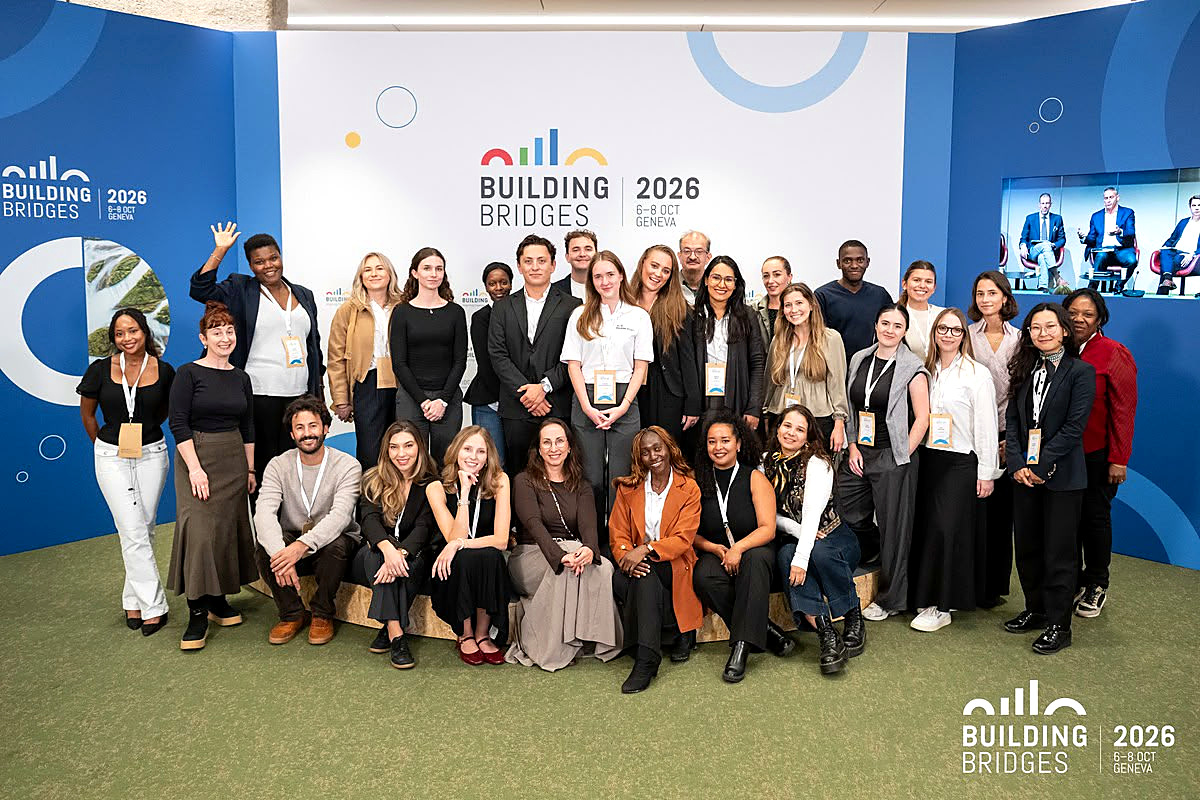
Volunteering and ecological stewardship are not the same thing. But the acknowledgement offers a human reminder that visible outcomes depend on contributions that do not always receive the spotlight.

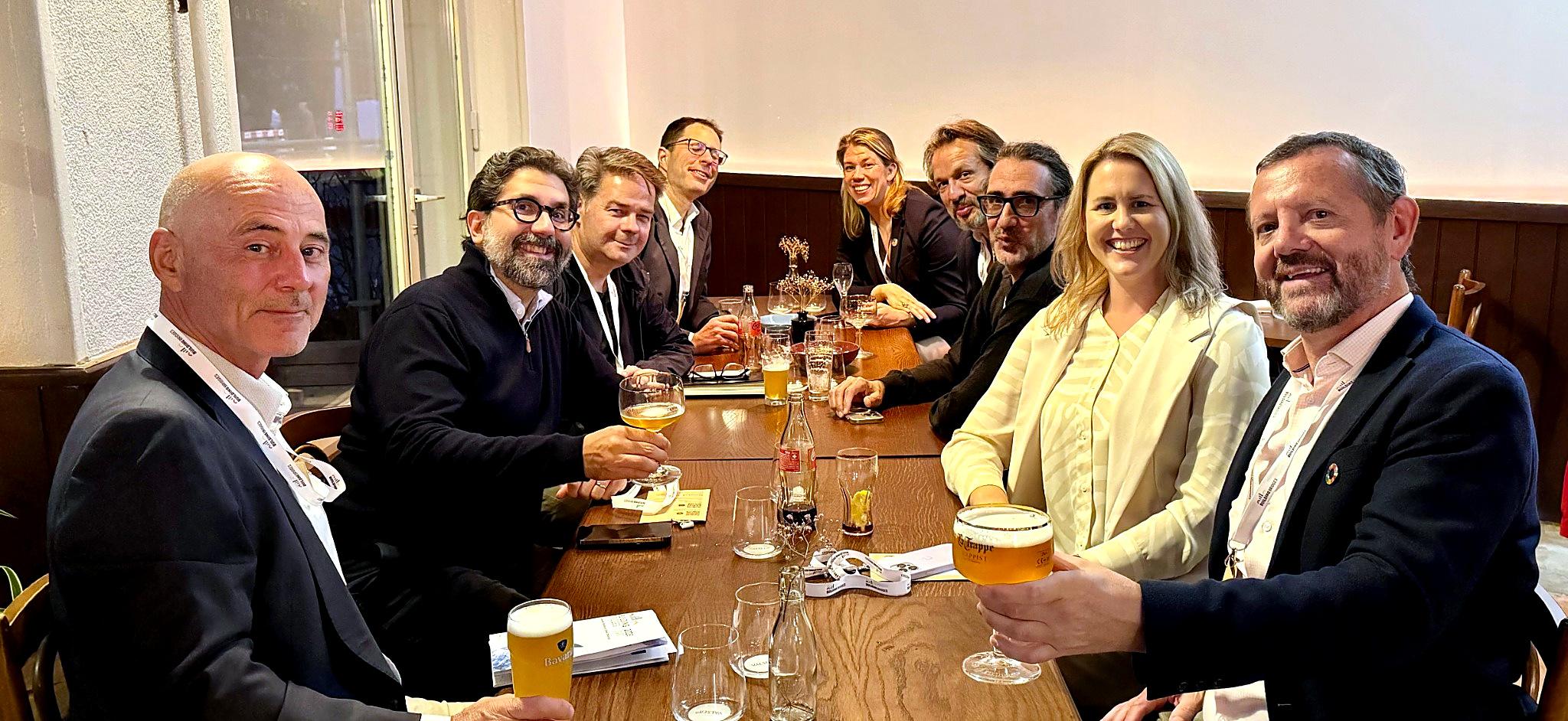
I am equally grateful for exchanges with Sharon Oseku-Frainier, D. Michael Adams, Mirabelle Adams, Risto Väyrynen, Thomas Hann, Rebecca Slade, Stuart Dobrijevic, Dr. Jan Amrit Poser and many others, as well as encouraging discussions with Anne Hornung and renewed connections across Geneva’s international community.
Some conversations challenged assumptions. Others exposed unexpected connections. Many opened possibilities for dialogue well beyond the conference.
The Bridge Still to Be Built
Building Bridges reinforced my conviction that the relationship between Nature and economic activity is entering an important period of institutional discovery.
We are making progress in understanding ecological dependencies, evaluating impacts, identifying risks and mobilising finance. All of this is necessary.
But alongside these advances lies another question:
Can our economic institutions recognise not only what Nature is worth, but also the contributions people make towards maintaining and restoring the shared ecological value on which we all depend?
Can that recognition become economically meaningful without converting Nature, or its services, into something someone must own or have the right to trade?
Answering these questions requires more than a financial product. It calls for institutional relationships between evidence, recognition, economic participation and legitimate governance.
The white paper offers one possible starting point, not a finished answer.
Perhaps the next bridge we need to build is not simply between sustainability and finance, but between contributions to our shared ecological inheritance and everyday economic participation.
And perhaps building it will help bring our economies into a more durable balance with Nature.
From shared ecological value to economic agency
My forthcoming white paper, From Shared Ecological Value to Economic Agency: Extending the Value Architecture of Market Economies, explores the missing institutional transmission channel between contributions to shared ecological value and usable economic capacity. MyDIO is presented as an initial practical application and a subject for independent testing, not a proven final answer.
Key concepts
Shared ecological value
The benefits of functioning ecological systems, often enjoyed collectively rather than held as an individual property right.
Economic agency
Usable capacity to participate in economic activity, including the possibility of making choices that would otherwise be financially constrained.
Transmission channel
An institutional mechanism connecting qualified contributions, credible recognition and economic acceptance without requiring ownership or trade in the underlying ecological value.
Independent governance
Arrangements through which evidence, qualification and recognition can be scrutinised and their rules developed with legitimate participation beyond the originating business.


Related reading:
- Theory of Change — including the Citizen’s Dividend for Nature
- Make Money First, Then (Maybe) Think of Nature
- What if Stewardship Was Financially Recognised?
- Nature is Not a Charity — It's an Economic Imperative
- Browse all essays on economy and Nature
Have questions or want to share your thoughts? Contact us here.
Want to know more about our mission? Visit the About page.
We value your privacy. Read our full Privacy Policy.